Monday, March 19, 2018

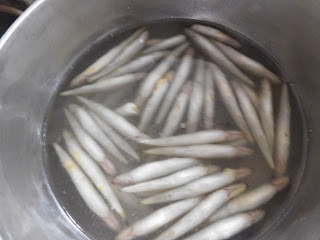
Smelt Fish Stew with Sate


I love all kinds of fish. Although for small fish like smelt, anchovies are my favorite for making stew because I enjoy eating small fish bones, which are very healthy for older people. These fish bones add more good calcium to people’s bones, which is an easy and healthy way to do this. Most Asian fish stews use garlic, ginger, shallot, and, in some cases, lemongrass, depending on the kind of fish. I will share this easy fish stew recipe to cook quickly. Some fish have to be marinated overnight. With this stew sauce, fish can stew right away over medium-low heat. I use my homemade sate sauce for its extra flavors and spices. A good sate sauce in Asian supermarkets will work. With the sate sauce, this recipe has a wonderful taste after all.

Ingredients:
1 package smelt fish of about 1 ½ lbs.
1 garlic clove minced
1 shallot, sliced
2 green onions, cut into 1 inch lengths
1/4 tsp black pepper
2 tbs peanut oil
Stew sauce ingredients:
1/2 cup coconut water
1/4 cup total fish sauce and soy sauce
1/4 tsp salt
2 tsp blackstrap molasses
1 tbs honey
1 tbs sugar
1 tbs sate sauce*

Directions:
To remove the fish odor:
I soak the fish in a combination of salt and vinegar for 2 hours.  Wash and drain.

Combine the stew sauce ingredients and mix well.

In a cast-iron pot, heat oil. Add garlic and shallot. Stir and cook until fragrant ( about 1 minute).

Add fish, stir, and cook for 2 minutes. 

Add stew sauce. Turn the heat to medium low and simmer, uncovered for 30 to 45 minutes.

 Add black pepper and adjust the seasonings to your liking with more sugar or fish sauce.


  The sauce should be reduced to almost completely absorbed by the fish. Add green onions.


Serve with hot cooked rice
* Follow the instructions for homemade sate sauce posted in my blog on July, 18, 2015


Easy Eggplant-Tofu-Mushrooms-Pineapple Stew


This is a heart-friendly recipe.  I like to make easy, healthy recipes and love sharing food with my friends and family.  Also, in my memories are the foods that I grew up with, which used available and healthy ingredients and were easy to prepare. Even though we grew up in Vietnam during the time that was terrible due to political upheaval with no freedom and a lack of economic opportunities, I think the simple food kept us healthy and happy. The eggplant, tofu, and pineapple are the best combination of both protein and fiber.  The sweetness from pineapple gives this dish a naturally sweet taste.  Keep in mind that when time is limited and only a few ingredients are available, this can still result in making a whole family happy and healthy.

Ingredients:
1 Japanese eggplant
2 cups pineapple
14 oz. medium-firm tofu
8 button mushrooms, cut in half (about 2 cups)
Stew sauce ingredients:
1 cup coconut water
2 tbs soy sauce
1/4 tsp salt
1 tbs mushroom sauce
1 tbs honey
1 tbs wine vinegar
Other ingredients:
1/2 cup sliced white onions
1 garlic clove, minced
1 tsp fresh minced ginger
Black pepper, chilli flakes

2 tsp oil


Directions:
Combine the stew sauce ingredients in a bowl and set aside.
Cut eggplant into 2 inch lengths and then quarter them.


For tofu (you can buy already-fried tofu). I make my own tofu; therefore, I cut into bite-size pieces and deep fry them.  Use 1/4 cup oil to fry the 14 oz. tofu.

Fresh pineapple is a good choice. However, using the frozen pineapple sold in most groceries will work.
In a stew pan, add oil.  Add onions and garlic cloves. Cook until fragrant.  Add pineapple and fried tofu.  Stir and cook for 1 minute.

  Add stew sauce and mushrooms and bring to boil.  Stir and cook for 5 minutes and then add eggplant. 

Continue to cook until all the sauce is absorbed. Adjust the seasoning to your liking with more salt, soy sauce, or sugar, black pepper, or chili flakes.

Before serving, sprinkle with chopped cilantro or fresh basil. Serve with rice.


Friday, March 16, 2018

Easy Healthy Teriyaki Chicken Using a Crock-Pot®

The Asian cuisine widely uses soy sauce and after that must be the next most popular choice – teriyaki sauce. Although it is usually purchased ready-made, teriyaki sauce is very good, but homemade teriyaki sauce is always better, more economical, and healthier because the ingredients to go into the sauce controlled by each cook. The flavorings for teriyaki sauce are garlic, chili, and ginger. Sometimes, I make plain teriyaki sauce and add the flavorings, such as mentioned above depending on the dish that I make that day. However, for the chicken prepared in a Crock-Pot® recipe today, I flavor my teriyaki sauce with all of them. Because homemade teriyaki sauce is so easy to prepare, I seldom make a large batch because the initial nutty aroma will deteriorate with time.  I think making the Crock-Pot® teriyaki chicken is a must-have recipe for a healthy dinner versus take-out food.  I hope this recipe will always be a number-one choice for adults and children.

Ingredients:
2 large chicken breasts
2 green onions, sliced for garnish
1 tsp roasted sesame seeds for garnish
Hot cooked rice
1/4 cup homemade teriyaki sauce
1 tbs coconut oil
Thickening ingredients:
1 tsp cornstarch
1 tbs water
Homemade teriyaki sauce:
1/4 cup equal quantities of soy sauce, mirin, and sake
2 tbs sugar
1tbs honey
1/4 tsp salt (optional)
1 garlic clove, a piece of sliced fresh ginger, and one dried chilli

Directions:
To make teriyaki sauce:
Combine all the homemade teriyaki sauce ingredients in a saucepan. Bring to boil; simmer for 3 minutes or until the sauce is reduced by one quarter. Let cool completely before storing in the refrigerator in a glass jar with a lid.

To make Crock-Pot® teriyaki:
Wash and dry the chicken breasts. Place in the Crock-Pot®. Pour in the teriyaki sauce; close the lid and cook for 2 ½ hours or more depending on each Crock-Pot®’s manufacturer.


When the chicken is tender, remove from the Crock-Pot® and shred.

Pour the sauce into a saucepan; bring to boil; mix the thickening ingredients and slowly pour into the sauce. Simmer the sauce until thickened. Add the green onions.


To serve:
Pour the sauce over the chicken and sprinkle with some sesame seeds. I like to chop some cilantro to top with chicken too.


Tip:  I use a rice cooker plus the Crock-Pot®. This gadget has the sauté function. Therefore, I just remove the chicken from the Crock-Pot® and add the thickening sauce into the rice cooker pot using the sauté function.  I love this rice cooker and suggest that each household have one. It is an inexpensive rice cooker, but with a lot of good functions, and it deserves a recommendation.


Monday, March 12, 2018

Mashed Cassava with Coconut (Khoai Mì Chà Bông)


Cassava is a very popular dish in the Vietnamese cuisine. Cassava is cooked with sticky rice, cooked with other root vegetables, to make sweet soup, or to make a cake, which is the Vietnamese favorite dish. The time after 1975 was a dark time for the South Vietnamese people when the communists took over the South and my family had to go to "the new economic zone”, which actually was the unclaimed wilderness. Our family was unfamiliar with farming, so life was very difficult at that time. Cassava or yucca was our family's daily food because there was not enough rice to make a good pot of rice and cassava was mixed into rice to make a larger amount of rice to feed the whole family. My mother sometimes made Khoai mì chà bông for us if we agreed to eat less rice because this dish is quite expensive due to the sugar and fresh coconut meat mixed with sesame seeds and peanuts that increased the sweet taste of this dish. It was more of a snack. On the Vietnamese streets, this dish was very popular and was usually presented on banana leaves and came with a spoon made from a dried coconut stem. This is a very Vietnamese traditional dish but is full of memories for me of those times. Each time I rested, my heart was solemnly restored, and I never forget to thank God for my family and the hundreds of thousands of South Vietnamese people who left their homeland to resettle all over the free and peaceful world. Today, I will introduce this dish to all my friends who frequently visit my blog. This dish is very easy to make and is almost like making mashed potatoes in the West; therefore, I temporarily translated this dish as "Sweet mashed cassava with coconut".  However, for me it is a sweet memory of a horrible time that my family had to in "the new economic zone".

Ingredients:
1 large yucca or about 1 to 1 ½ lbs.
1 cup coconut milk
2 tbs Sugar
1 tbs Salt
Accompany with: 2 cups shredded sweet coconut flakes
Peanut-sesame mixture (muối mè)*

Equipment:
Potato masher
Pressure cooker

Directions:
Peel off the yucca skin. Wash and cut into big chunks. 


Place all yucca chunks in salted water and soak them for a few hours or overnight (my mom said this will remove all the toxins in the yucca). Drain.
Place yucca in a pressure cooker. Add coconut milk and salt (about 1/2 tsp). Close the lid and cook for 10 minutes (the cooking time varies depending upon each pressure cooker).

Let cool off a little. Place all cooked yucca in a mixing bowl.

Remove the core of the cooked yucca and use the masher to mash the cooked yucca into fine but still holding its shape (do not overmash as if making Western mashed potatoes).

Mix the shredded coconut and some sugar depending on each cook’s taste.

Sprinkle with peanut-sesame on top and serve.


*Peanut-sesame mixture is a combination of roasted peanuts and roasted sesame seeds, sugar, and salt. Every vegan Vietnamese kitchen always has this condiment. The ratio is 2 to 1 (2 tbs sugar and 1 tbs salt).

Eggplant and Mushroom (Meatless)Balls

I like eggplant and mushrooms; both of these vegetables are very healthy to eat daily. Most of the time, I just bake the eggplants or stir-fry the mushrooms. Today, I thought out of the box to make eggplant into a meatball. This recipe is quite easy, and the sauce to come with this dish is each cook’s choice. Today, I will use store-bought marinara sauce, which turns out saving time with fantastic results.

Ingredients:
1 eggplant, washed and cubed
3 cups sliced button mushrooms
2 cups panko breadcrumbs 
1/3 cup all-purpose flour
Salt and pepper to taste
1/4 cup canola or olive oil
Dried herbs: 1 tsp basil
Fresh herbs: cilantro or parsley for garnish
Serve with sauce your choice

Directions:
Heat 1 tbs of oil in a sauté pan. Add sliced mushrooms and eggplant cubes. Stir and cook for few minutes; season with salt, black pepper, and basil. Cover and cook over medium low heat for 10 minutes or until mushrooms and eggplants are soft. 

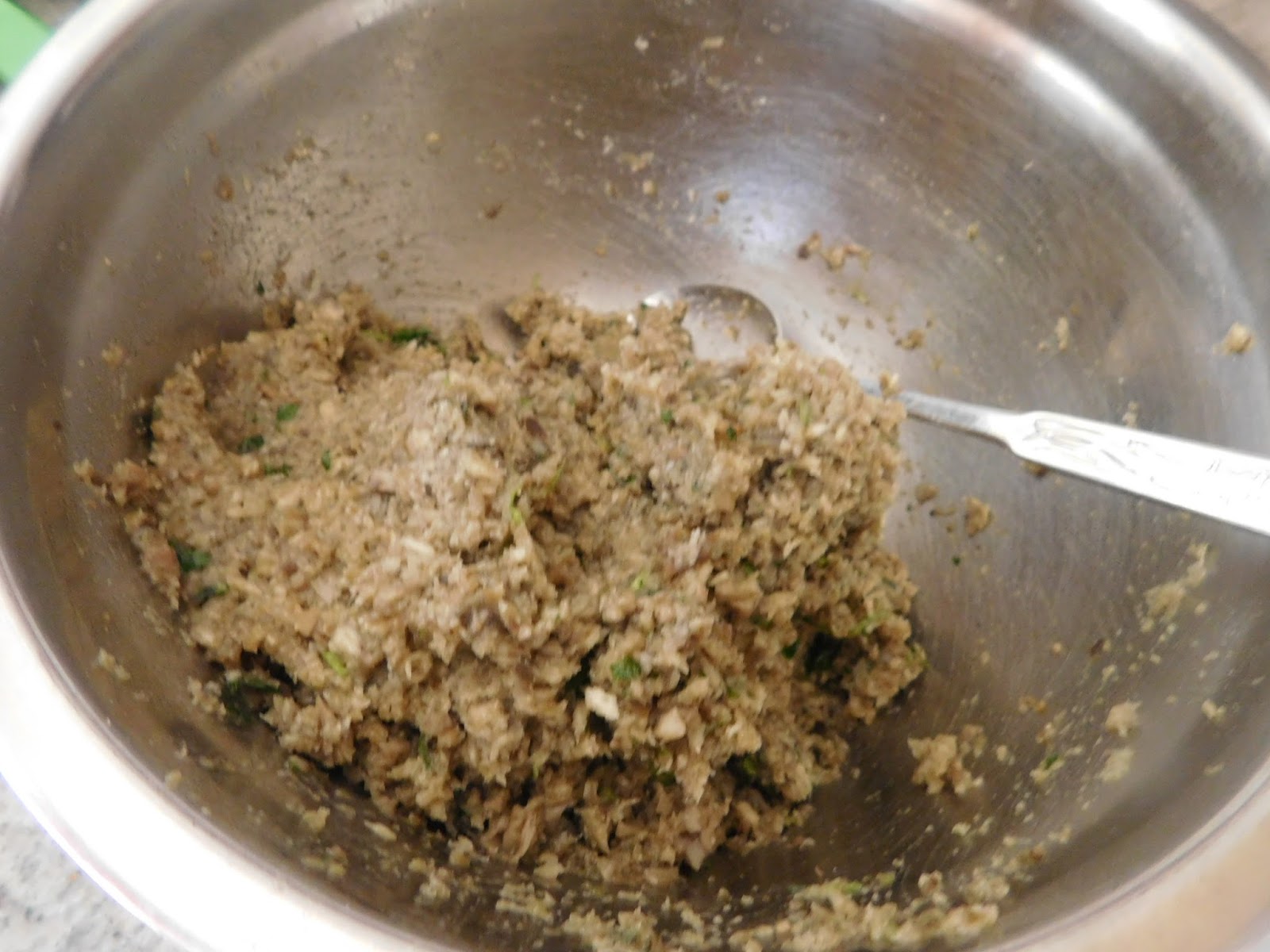
Place all cooked eggplant and mushrooms into a food processor or blender (I add some fresh cilantro and blend until smooth).


Pour the mixture into a mixing bowl and add panko bread crumbs. I use panko because I want this eggplant to taste more Asian (you can use any kind of bread crumbs and change to an Italian seasoning). 


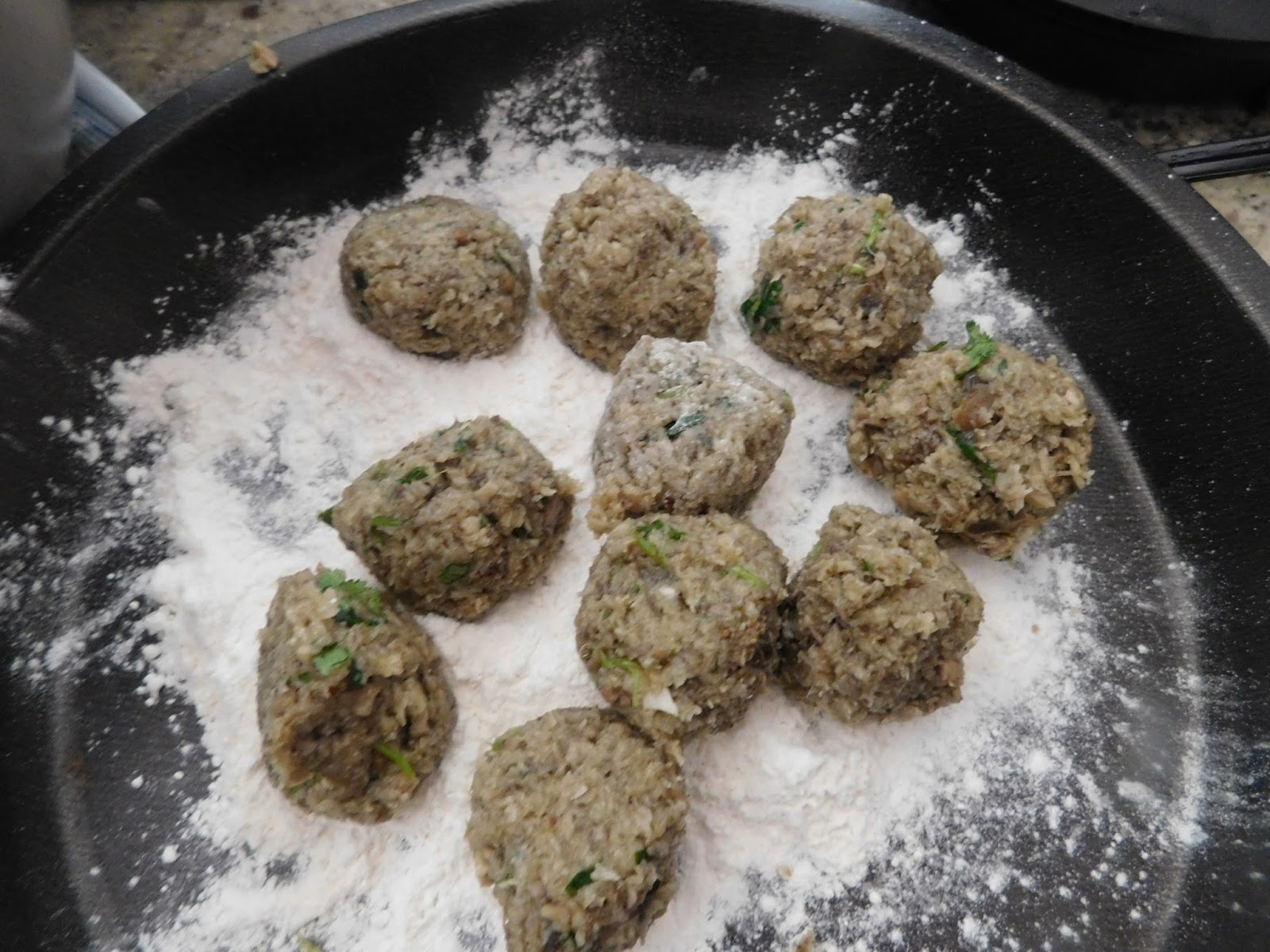
Mix well and form the mixture into balls (about a 1/2 to 1 inch in diameter).
Roll each ball into the all-purpose flour.


Heat the rest of the oil in a large pan and fry all the eggplant-mushroom balls until golden brown. 


Remove the eggplant balls and serve with dipping sauce on the side or add the marinara sauce or tomato sauce into the pan and cook for 10 more minutes and then serve.

The chopped onions and garlic can be added to the sauce to have more flavor.


Friday, March 9, 2018

Easy Eggs for Breakfast


The egg is the most amazing nutritious food for breakfast or at any time of the day. The egg is not just fantastic to start each day; it gives an energy boost as well. The benefits of eating an egg are endless, especially for many Asian people where meats are not easily available. I love every manner of cooking eggs: Sunny Side Up, Over Easy, scrambled, baked, or egg foo young. This morning, I will show you easy to make Sunny Side Up and Over Easy egg recipes for breakfast. These recipes should be on the list of the easiest and healthiest breakfasts ever, if not eating with bread.  However, using wheat bread or a balanced approach will work.

Ingredients:
2 eggs
2 tbs coconut oil
Salt and pepper
Bread to serve

Directions:
Heat a small skillet over medium heat; add coconut oil and heat oil for a few seconds.
Break an egg into a small bowl and pour into the skillet.


Use a spoon to scoop the extra oil in the skillet to pour over the yolk; continue basting the yolk.
Add salt and pepper.

Use a spatula to remove the egg onto a serving plate.
Wipe off the excess oil from the skillet.
Add another tbs of oil.
Break an egg into a small bowl and pour into the skillet placed over medium heat.

Let egg cook for less then one minute or until you can see the bottom of the egg browning.

Use a spatula to flip the egg and cook for few more seconds.
Salt and pepper to your taste.
Enjoy!!


12 Essential Rules To Live More Like A Zen Monk

12 Essential Rules To Live More Like A Zen Monk 
 Leo Babauta - Source-Nguồn: zenhabits.net

“We have more possibilities available in each moment than we realize.” – Thich Nhat Hanh
I’m not a Zen monk, nor will I ever become one. However, I find great inspiration in the way they try to live their lives: the simplicity of their lives, the concentration and mindfulness of every activity, the calm and peace they find in their days.
You probably don’t want to become a Zen monk either, but you can live your life in a more Zen-like manner by following a few simple rules.
Why live more like a Zen monk? Because who among us can’t use a little more concentration, tranquility, and mindfulness in our lives? Because Zen monks for hundreds of years have devoted their lives to being present in everything they do, to being dedicated and to serving others. Because it serves as an example for our lives, and whether we ever really reach that ideal is not the point.
One of my favorite Zen monks, Thich Nhat Hanh, simplified the rules in just a few words: “Smile, breathe and go slowly.” It doesn’t get any better than that.
However, for those who would like a little more detail, I thought I’d share some of the things I’ve discovered to work very well in my experiments with Zen-like living. I am no Zen master ... I am not even a Zen Buddhist. However, I’ve found that there are certain principles that can be applied to any life, no matter what your religious beliefs or what your standard of living.
“Zen is not some kind of excitement, but concentration on our usual everyday routine.” – Shunryu Suzuki
1) DO ONE THING AT A TIME.
This rule (and some of the others that follow) will be familiar to long-time Zen Habits readers. It’s part of my philosophy, and it’s also a part of the life of a Zen monk: single-task, don’t multi-task. When you’re pouring water, just pour water. When you’re eating, just eat. When you’re bathing, just bathe. Don’t try to knock off a few tasks while eating or bathing. Zen proverb: “When walking, walk. When eating, eat.”
2) DO IT SLOWLY AND DELIBERATELY.
You can do one task at a time, but also rush that task. Instead, take your time, and move slowly. Make your actions deliberate, not rushed and random. It takes practice, but it helps you focus on the task.
3) DO IT COMPLETELY.
Put your mind completely on the task. Don’t move on to the next task until you’re finished. If, for some reason, you have no choice but to move on to something else, try to at least put away the unfinished task and clean up after yourself. If you prepare a sandwich, don’t start eating it until you’ve put away the stuff you used to prepare it, wiped down the counter, and washed the dishes used for preparation. Then you’re done with that task, and can focus more completely on the next task.
4) DO LESS.
A Zen monk doesn’t lead a lazy life: he wakes early and has a day filled with work. However, he doesn’t have an unending task list either - there are certain things he’s going to do today, and no more. If you do less, you can do those things more slowly, more completely and with more concentration. If you fill your day with tasks, you will be rushing from one thing to the next without stopping to think about what you do.
5) PUT SPACE BETWEEN THINGS.
Related to the “Do less” rule, but it’s a way of managing your schedule so that you always have time to complete each task. Don’t schedule things close together — instead, leave room between things on your schedule. That gives you a more relaxed schedule, and leaves space in case one task takes longer than you planned.
6) DEVELOP RITUALS.
Zen monks have rituals for many things they do, from eating to cleaning to meditation. Ritual gives something a sense of importance — if it’s important enough to have a ritual, it’s important enough to be given your entire attention, and to be done slowly and correctly. You don’t have to learn the Zen monk rituals — you can create your own, for the preparation of food, for eating, for cleaning, for what you do before you start your work, for what you do when you wake up and before you go to bed, for what you do just before exercise. Anything you want, really.
7) DESIGNATE TIME FOR CERTAIN THINGS.
There are certain times in the day of a Zen monk designated for certain activities. A time for bathing, a time for work, a time for cleaning, a time for eating. This ensures that those things get done regularly. You can designate time for your own activities, whether that be work or cleaning or exercise or quiet contemplation. If it’s important enough to do regularly, consider designating a time for it.
8) DEVOTE TIME TO SITTING.
In the life of a Zen monk, sitting meditation (zazen) is one of the most important parts of his day. Each day, there is time designated just for sitting. This meditation is really practice for learning to be present. You can devote time for sitting meditation, or do what I do: I use running as a way to practice being in the moment. You could use any activity in the same way, as long as you do it regularly and practice being present.
9) SMILE AND SERVE OTHERS.
Zen monks spend part of their day in service to others, whether that be other monks in the monastery or people on the outside world. It teaches them humility, and ensures that their lives are not just selfish, but devoted to others. If you’re a parent, it’s likely you already spend at least some time in service to others in your household, and non-parents may already do this too. Similarly, smiling and being kind to others can be a great way to improve the lives of those around you. Also consider volunteering for charity work.
10) MAKE CLEANING AND COOKING BECOME MEDITATION.
Aside from the zazen mentioned above, cooking and cleaning are two of the most exalted parts of a Zen monk’s day. They are both great ways to practice mindfulness, and can be great rituals performed each day. If cooking and cleaning seem like boring chores to you, try doing them as a form of meditation. Put your entire mind into those tasks, concentrate, and do them slowly and completely. It could change your entire day (as well as leave you with a cleaner house).
11) THINK ABOUT WHAT IS NECESSARY.
There is little in a Zen monk’s life that isn’t necessary. He doesn’t have a closet full of shoes, or the latest in trendy clothes. He doesn’t have a refrigerator and cabinets full of junk food. He doesn’t have the latest gadgets, cars, televisions, or iPod. He has basic clothing, basic shelter, basic utensils, basic tools, and the most basic food (they eat simple, vegetarian meals consisting usually of rice, miso soup, vegetables, and pickled vegetables). Now, I’m not saying you should live exactly like a Zen monk — I certainly don’t. But it does serve as a reminder that there is much in our lives that aren’t necessary, and it can be useful to give some thought about what we really need, and whether it is important to have all the stuff we have that’s not necessary.
12) LIVE SIMPLY.
The corollary of Rule 11 is that if something isn’t necessary, you can probably live without it. And so to live simply is to rid your life of as many of the unnecessary and unessential things as you can, to make room for the essential. Now, what is essential will be different to each person. For me, my family, my writing, my running and my reading are essential. To others, yoga and spending time with close friends might be essential. For others it will be nursing and volunteering and going to church and collecting comic books. There is no law saying what should be essential for you - but you should consider what is most important to your life, and make room for that by eliminating the other less essential things in your life.
“Before enlightenment chop wood and carry water. After enlightenment, chop wood and carry water.” – Wu Li